Send us your department list and we will suggest a mix of titles that fits the syllabus and the budget, rather than a fixed bundle.
| Name on Cheque/DD: | Akinik Publications |
| Payable at: | Delhi |
| Postal Address: | C-11/169, Sector 3, Rohini, Delhi-110085, India. |
| Mob: | +91-9711224068 |
An engineering subscription is a standing order placed by a technical institute or university library for the branches its departments teach. Once the order is confirmed for a volume year, each issue reaches the library as it is published, so the acquisitions section is not raising a fresh order every few months for every branch.
We supply engineering subscriptions across eight streams, and each has its own page with the titles and the enquiry route:
A library may take one branch or several, and departments can still be billed on a single institutional order.
Two things separate it, and both change how the list should be bought. The first is pace. In several engineering branches the useful literature is recent, so a department reads the current issue hardest and a subscription that lapses for a year leaves a gap where the newest work should be. The second is that engineering reads against standards and codes as much as against theory, which means currency is not a preference but a requirement.
That said, the branches do not behave alike, and treating them as one block is the usual mistake. Design, thermal and materials fundamentals age slowly; computing hardware and software topics age quickly. A sound engineering list therefore mixes titles held continuously for the slow-moving branches with titles reviewed more often for the fast-moving ones, rather than applying one renewal rule across the whole faculty.
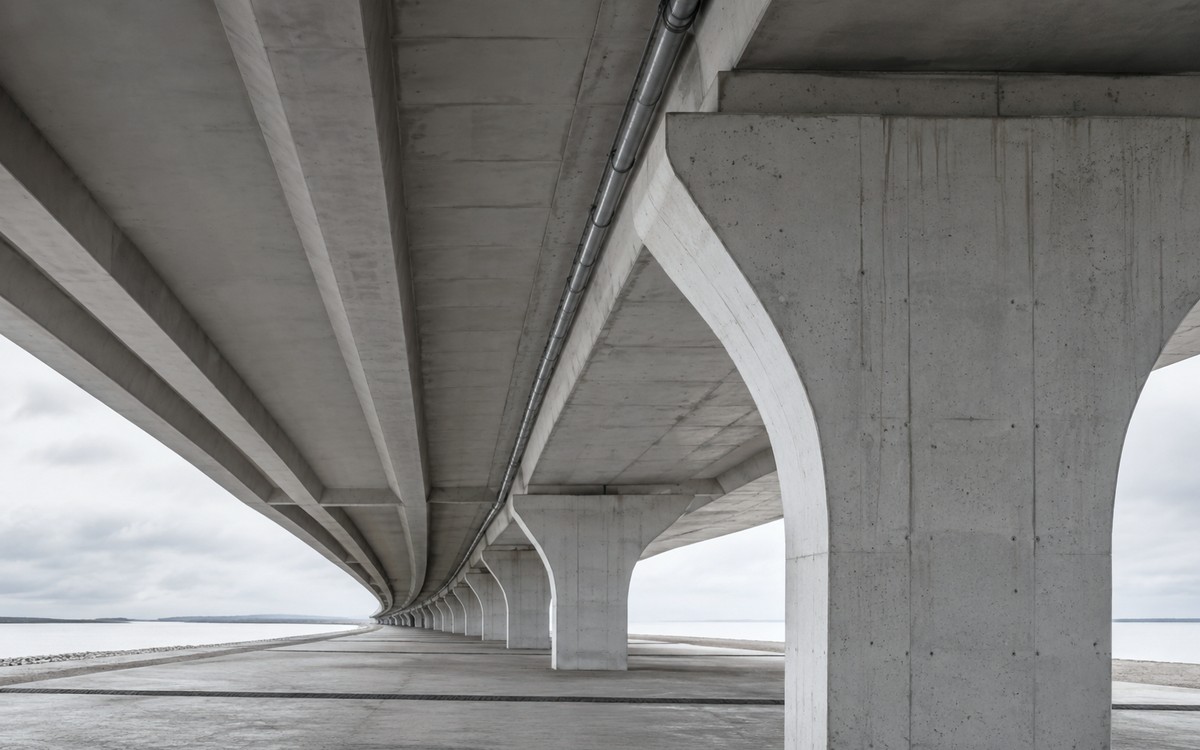
Because civil practice is tied to codes, standards and specifications that are revised, and a design taught from a superseded clause is a problem that follows the student into practice. A department teaching structures, geotechnical or transportation engineering needs literature that discusses current provisions, not only the theory behind them.
There is a second reason particular to this branch. Civil engineering research is heavy on case studies — a bridge, a foundation, a pavement that behaved unexpectedly — and those studies are most useful while the construction methods they describe are still in use. Keeping the civil engineering subscription continuous rather than renewing it in alternate years is what keeps that material arriving while it is still applicable. Where funds are tight, it is usually better to hold fewer civil titles without a break than more titles with gaps.
This branch changes faster than most of the faculty around it, and a list drawn up five years ago will have drifted from what is being taught. Power systems, control, embedded systems and communication have each moved, and a department running a new elective usually finds the library has nothing recent on it.
The practical approach is to review the electrical and electronics subscription against the current syllabus each year rather than renewing it unchanged. Ask the department which papers were added or dropped, and let that drive one or two substitutions on the list. It also helps to keep at least one broad title that covers the whole branch alongside the specialised ones, because that is what a first-year project student can actually read; a narrowly focused title is often useless to anyone below the final year.
For a branch this current, the honest answer is that print serves a different purpose here than in older subjects. Nobody looks up a networking protocol in a bound volume. But a reading room where current issues are displayed is one of the few reliable ways students encounter literature they were not already searching for, and in a branch where most reading is targeted search, that browsing matters more than it seems.
Many institutes settle this by keeping print for the titles the department wants students to see and taking e-journals for the ones staff search. If your information technology subscription has to be one or the other, base the decision on where your students actually sit — a residential campus with a used reading room and a commuter college give different answers.
A mechanical list normally spreads across four areas: design and machine elements, thermal and fluid sciences, manufacturing and production, and materials. The balance should follow the department’s own strengths rather than an even split, because most departments teach all four but research in only one or two.
Mechanical is also one of the branches where older volumes keep their value. A paper on heat transfer correlations or fatigue behaviour is still being cited decades later, so a complete run is worth more here than in the fast-moving branches. When planning the mechanical subscription, it is worth protecting the continuity of the fundamentals titles and treating the manufacturing-technology titles as the ones to review, since those track equipment and processes that do change.
Computer science has a publishing culture the library should understand before it buys. In several areas the leading work appears first in conference proceedings rather than in journals, and a department that judges the collection only by its journal list can conclude the library has nothing while the opposite is true. Journals in this field often carry the extended, more thoroughly reviewed version of work that appeared earlier elsewhere.
That makes the journal subscription valuable for a different reason than in other branches: it is where a student finds the full treatment, with the method described properly and the results given in detail. When choosing the computer science subscription, favour titles that publish substantial articles over those that publish short notes, and check the last two issues to see which kind the title actually runs.
A chemical engineering list is usually built around four concerns — process design and simulation, reaction engineering, separation and transport processes, and safety. The last of these is the one most often left off a shortlist drawn up from a syllabus, and the one a department misses first, because process safety literature is read by staff and final-year students working on plant design rather than by the class as a whole.
Beyond the syllabus, check that the chemical engineering subscription covers the scale your students work at. A title reporting laboratory-scale kinetics and one reporting plant-scale operation are both legitimate and serve different projects. A department running a design project every year gets more from the second; one whose research is bench-based gets more from the first.
Because physics sits underneath several branches rather than beside them. Condensed matter and materials physics feed mechanical and electronics; optics feeds communication; applied physics feeds nearly every laboratory course in the first two years. A physics subscription is therefore read by more than one department, which makes it among the better-value lines on an engineering list rather than an academic extra.
It is also the branch where a long run pays back most clearly. Physics literature ages slowly — a paper from twenty years ago is still the reference for a result that has not been superseded — so a continuous run holds its value in a way that a fast-moving computing title does not. If the budget forces a choice between starting a new physics title and completing a run already begun, completing the run is usually the better decision.
More than any other branch on this list. Architecture carries a large part of its argument in drawings, plans, sections and photographs, and those are reproduced at a size and quality on paper that a laptop screen does not match. A studio critique with the journal open on the table is a normal way to use the material; the same page on a phone is not.
When shortlisting an architecture subscription, ask for a recent issue and look at the reproduction before you look at the scholarship: whether plans are printed large enough to read a scale bar, whether photographs are given a full page where they need one, and whether drawings sit near the text discussing them. A title that gets this wrong will sit unopened in a studio however well it is written.
The two programmes read differently and a single list rarely serves both. Undergraduate students need broad titles they can read at their level, ideally covering a whole branch, because most of their use is project work and current awareness. Postgraduate students and staff need narrower research titles in the areas the department actually supervises.
A workable method is to ask each department for a ranked list rather than a wish list, then fund the top of every list before funding the middle of any of them. Add four checks before a title reaches the order:
The list of subscription journals and our notes on choosing journals to subscribe to are a practical starting point.
Decide it branch by branch rather than as one policy for the faculty, because the branches genuinely differ.
| Print suits | Online suits | |
|---|---|---|
| Reading | Browsing current issues, studio and drawing work | Targeted search, literature review |
| Branches | Architecture, civil, mechanical fundamentals | IT, computer science, fast-moving topics |
| Access | The copy on the shelf, no login | Licence-based, per the publisher’s terms |
| Long term | Stays readable without renewal | Depends on the licence and archive terms |
Most institutes end up with both — print where a physical copy is genuinely used, online access where the reading is search-driven. What rarely works is buying one format for the whole faculty because it was simpler to approve.
This causes more wrong dispatches in engineering than any other single cause, because a great many titles begin with the name of the same branch and differ only by a subtitle or by the issuing body. Two journals whose names differ by one word may cover quite different subject matter.
Settle it on the order itself rather than in a covering letter. For every line, give:
The ISSN removes almost every ambiguity by itself. The receiving department removes the rest — a technical institute often has one billing address and several block-wise delivery points, and a parcel addressed only to the institute can sit in a mail room for weeks.
Panels and criteria differ and are revised from time to time, so treat this as preparation rather than as a checklist for any particular body. In practice a technical library is usually asked to evidence three things: what it subscribes to, that the subscriptions are current, and that they relate to the programmes actually running.
The paperwork that answers all three already exists in the acquisitions section — the order, the invoice, and the record of issues received. Keeping those filed by volume year and by department turns a difficult week before a visit into an afternoon, and makes gaps visible early enough to fix. Where a criterion asks about the standing of a title, check the position on the indexing body’s own website rather than relying on a claim reproduced in a catalogue, since coverage is added and withdrawn over time.
Dividing it evenly across branches feels fair and rarely matches how the titles are used. A branch with a large postgraduate programme and active supervision reads far more than one teaching only undergraduate courses, and the branch with the most students is not always the one with the most reading.
Two rules settle most of it. Fund continuity first — protect the runs already under way in the slow-moving branches, since a saving there this year destroys value built over many. Then fund from what remains, preferring a title two branches will read over one serving a single small group; physics, materials and computing titles often qualify. Review the split at renewal rather than at the start of the financial year, because that is when the acquisitions section knows which titles were actually used.
Do it before the order is raised. Engineering attracts a large number of titles whose names and websites imitate established journals, and the cost of finding out afterwards is a wasted subscription plus a gap in the shelf. Four checks settle most cases:
That last point matters most at an inspection. Indexing status differs from title to title and changes over time, so the only version of the answer that will still be true when a panel asks is the one on the indexing body’s own site.




 Civil Engineering Journal Subscription
 Electrical & Electronics Journal Subscription
 Information Technology Journal Subscription
 Mechanical Journal Subscription
 Computer Science Journal Subscription
 Chemical Engineering Journal Subscription
 Physics Journal Subscription
 Architecture Journal Subscription