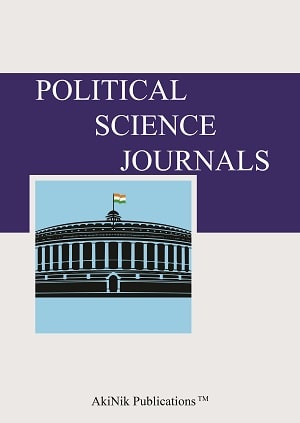

Send us your department list and we will suggest a mix of titles that fits the syllabus and the budget, rather than a fixed bundle.
| Name on Cheque/DD: | Akinik Publications |
| Payable at: | Delhi |
| Postal Address: | C-11/169, Sector 3, Rohini, Delhi-110085, India. |
| Mob: | +91-9711224068 |
An academic subscription is a standing order placed by a college or university library for the arts, social science and allied titles its departments teach from. Once the order is confirmed for a volume year, each issue reaches the library as it is published, so the acquisitions section is not raising a fresh order every few months.
We supply academic subscriptions across eight streams, and each has its own page with the titles and the enquiry route:
A library may take one stream or several, and there is no bundle it is obliged to buy.
The difference is not the paperwork, it is how the literature ages. In most laboratory sciences the useful life of a paper is short and a department reads the current issue hardest. In law, history, Sanskrit and political science the opposite holds: an article written twenty years ago is still argued with, cited and set as reading, so the value of a title sits in the whole run rather than in the latest number.
That single fact changes three decisions. Back volumes matter more, because a gap in the run is a gap in the argument. Print matters more, because a bound volume stays readable on the shelf without depending on a licence being renewed. And cancelling a title costs more than it saves — a science title dropped for a year can often be picked up again, while a humanities run with a hole in it is permanently less useful. Weigh an arts list on continuity, not on this year’s usage figures.
Legal writing is cumulative in a way few other subjects are. A commentary refers to an earlier note, which argues with a case comment from several years before, which in turn responds to an amendment. A reader who can follow that chain on the shelf understands the position; a reader who finds one link missing has to take the argument on trust.
For that reason a law library is usually better served by fewer titles held completely than by many titles held in pieces. When funds are tight, the sound decision is to protect the runs already started and delay adding a new title, rather than to trim a little from every subscription. It also helps to note the renewal for law journal subscriptions separately from the general library calendar, because a lapse here is harder to repair later than in most other departments.
A B.Ed or D.El.Ed department reads for two different purposes at once, and a list that serves only one of them disappoints quickly. Student teachers need practical material — classroom method, assessment design, inclusive practice, material they can carry into a lesson next week. Faculty need research literature to supervise dissertations and to publish themselves.
The usual mistake is buying entirely for the second group because it looks more scholarly on an inspection list. A more useful mix keeps a few research titles for the staff room and several practice-oriented titles the trainees will actually open. It is also worth checking that the education journals you choose cover the school stages your programme prepares teachers for; a title focused on higher education has limited use in an elementary-teacher programme, however good it is.
More than most. A history reader works comparatively — several volumes open at once, a plate in one next to a map in another, a footnote checked against a source cited three volumes earlier. That kind of reading is slow and awkward on screen and natural on a table.
There is a second reason that matters at the acquisitions desk. A bound run of history journals remains readable for as long as the library keeps it, without depending on a licence, a login or a platform staying in business. For a subject whose own material is often a century old, that permanence is not a sentimental preference; it is the same argument the department makes about archives. Many libraries settle this by keeping print for history and taking online where the reading is quicker and more current.
Check how the title handles its figures. Geography carries an unusual amount of its meaning in maps, contour diagrams, satellite plates and cross-sections, and a journal that prints them small, in grey, or squeezed into a single column is far less useful in a classroom than its text alone suggests.
Ask for a recent issue before you commit and look at three things: whether maps are reproduced large enough to read a legend, whether colour is used where the data needs it, and whether figures sit near the text that discusses them. A title that gets these right serves both a lecture and a dissertation; one that does not will sit unopened however strong its scholarship. The same test applies to the geography titles a department shortlists for fieldwork and remote-sensing courses.
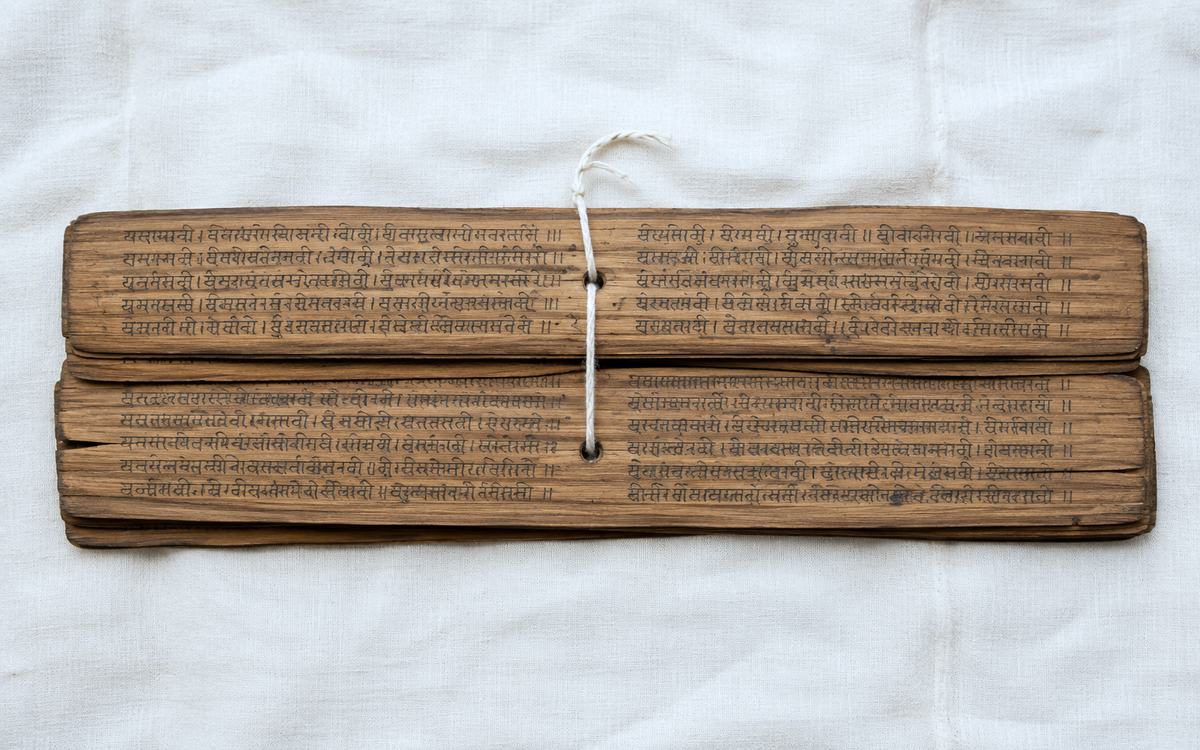
Yes, and for these subjects print is often the practical choice rather than the traditional one. Devanagari set with diacritics, transliteration schemes, verse laid out with its metre visible, and critical apparatus printed alongside the text all depend on typesetting that survives reliably on paper and does not always survive re-flowing on a screen.
When shortlisting Sanskrit journal subscriptions, look at how a recent issue handles a passage with commentary: whether the transliteration is consistent, whether the text and the notes stay on the same opening, and whether the fonts render the conjuncts cleanly. A department that teaches from the journal, rather than only citing it, will notice these things every week. If your college also teaches modern Indian languages, the language journal subscription list is worth reading alongside this one.
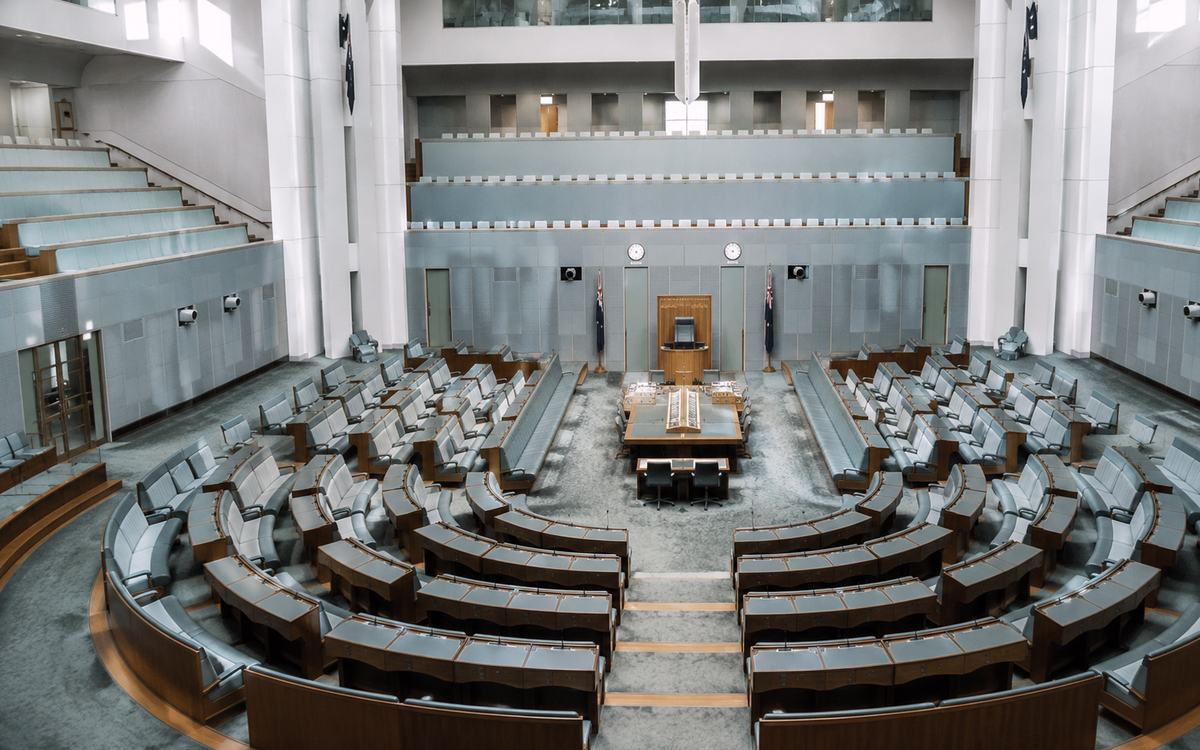
Political science is one of the few subjects where both halves of the collection are read hard. Governance, policy and international relations move quickly, so a department that only holds older volumes will be teaching a settled version of an unsettled question. But political theory is cumulative in the way philosophy is, and a run that starts three years ago cannot support a serious dissertation.
A workable arrangement is to treat the two needs as two lines on the list rather than trying to find one title that does both. Keep the current-affairs and policy titles under active review, dropping and adding as the department’s teaching shifts; keep the theory titles as long continuous runs and leave them alone. Reviewing every political science subscription by the same rule is what usually produces a collection that is neither current nor deep.
A physical education list generally spreads across four kinds of material, and the balance depends on what the college actually runs. Sports science and exercise physiology serve the laboratory and the dissertation. Coaching and training method serve the ground. Health, nutrition and wellness serve the general education component. Sports psychology and management serve the newer papers many syllabi have added.
The common error is buying only the first group because it reads as the most research-like. A department whose students spend most of the week coaching gets more from applied titles that discuss method, injury prevention and testing protocols. If your college runs both a B.P.Ed and an M.P.Ed programme, it is worth splitting the physical education subscription list explicitly between the two, because the reading level and the purpose are genuinely different.
Because very few colleges are purely one faculty. An arts-led institution usually still teaches botany, zoology, microbiology or environmental science, often to large first-year groups, and those departments are easy to overlook when the subscription list is drawn up by an acquisitions section whose main correspondence is with the humanities faculties.
There is also a growing overlap the list should reflect. Environmental studies is taught in geography and in life science; health and nutrition appear in physical education and in life science; research method is common to all of them. A few well-chosen life science journal subscriptions will therefore be read by more than one department, which makes them among the better-value lines on an academic list rather than an afterthought at the end of it.
Ask each department for a ranked list rather than a wish list, then fund the top of every list before funding the middle of any of them. This one change removes most of the argument, because it separates what a department needs from what it would like.
Then apply four checks to each title before it goes on the order:
If you are still drawing up the shortlist, the list of subscription journals and our notes on choosing journals to subscribe to are a practical place to begin.
This is a real problem in academic subjects and it causes more wrong dispatches than any other single cause. Humanities and social science publishing is full of titles that differ by one word, by a subtitle, or only by the issuing body — several perfectly distinct journals may all begin with the name of the same discipline.
Guard against it on the order itself rather than in the covering letter. For every line, give:
The ISSN settles almost every ambiguity by itself, and the receiving department settles the rest — a large college often has one billing address and several delivery points, and a parcel addressed only to the institution can sit in a mail room for weeks.
Panels differ, and the criteria are revised from time to time, so treat what follows as preparation rather than as a checklist to satisfy any particular body. In practice a library is usually asked to evidence three things: what it subscribes to, that the subscriptions are current, and that they relate to the programmes actually being taught.
The paperwork that answers all three is the same paperwork the acquisitions section already generates — the order, the invoice, and the record of issues received. Keeping those filed by volume year, department by department, turns a stressful week before a visit into an afternoon. It is also the moment when gaps become visible, which is a good argument for reviewing the list annually rather than only when a panel is announced. Where a criterion asks about the standing of a title, check the position on the indexing body’s own website, since coverage is added and withdrawn over time.
Dividing it evenly across departments feels fair and rarely matches how the titles are used. Some faculties need depth — law, history and Sanskrit gain from a few titles followed continuously, because the research is cumulative and a broken run loses value. Others gain from breadth, where several titles skimmed for current awareness serve the department better than one followed closely.
An academic subscription budget is best planned by funding continuity first: protect the runs already under way, since those are the lines where a saving this year destroys value built over many. Fund new titles from what remains, and prefer a title two departments will read over one that serves a single small group. Reviewing the split at renewal, rather than at the start of the financial year, gives the acquisitions section the information it actually needs — which titles were used in the year just finished.
Back volumes are handled separately from a current subscription and depend on what remains in stock with the publisher. Send the title, the volumes and the years you need, and we will check availability before anything is committed.
For academic subjects this is worth doing early rather than eventually. Availability drops sharply the further back you go, so a run that can be completed this year may have permanent gaps next year. And in law, history and Sanskrit a back run is often worth more to a research department than an additional current title, because a later article is only fully usable next to the earlier work it is answering. If your library is filling gaps as well as subscribing, say so in the same enquiry — it is easier to quote both together than to match them up afterwards.
Do it before the academic subscription order is raised, not after the first issue arrives. Four checks settle most cases and none of them takes long:
That last point is worth stating plainly: indexing status differs from title to title and changes over time, so a claim made in a printed catalogue can outlive the fact. The version of the answer that will still be true when an audit or accreditation panel asks is the one on the indexing body’s own site.




 Law Journal Subscription
 Education Journal Subscription
 History Journal Subscription
 Geography Journal Subscription
 Sanskrit Journal Subscription
 Political Science Journal Subscription
 Physical Education Journal Subscription
 Life Science Journal Subscription