Please wait...
Choose/Select Your Country
Toll Free: 1800-1234-070, Ph. No.: +91-9711224068
  1. Home
  2. chevron_right
  3. Book

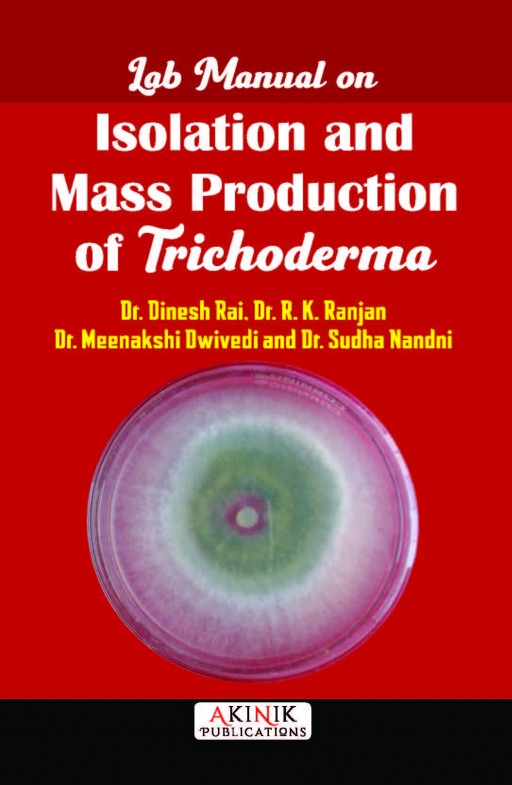
Lab Manual on Isolation and Mass Production of Trichoderma

Lab Manual on Isolation and Mass Production of Trichoderma


$ 12

(Change Currency to )

Author(s):Dr. Dinesh Rai, Dr. R.K. Ranjan, Dr. Meenakshi Dwivedi and Dr. Sudha Nandni
Paperback ISBN:978-93-6135-789-3
Publisher:AkiNik Publications
Language:English
Pages:49
Publication Year:2024
Binding:Paperback
DOI:https://doi.org/10.22271/ed.book.3278

Price Details
Amount$ 12

Availabilityin stock
Payable Amount$ 12

This Book is Indexed in:

Indexed in Crossref Indexed in Dimensions Indexed in Research Access

Description

India became food secure by using high yielding varieties of seeds, fertilisers to nourish the soil and pesticides to keep crop damage at bay. But this was accompanied with environmental damage through over use of pesticides, and impacted human and ecological health. Due to negative impact of the pesticides, there is an urgent need to scale up alternative approaches for the management of plant diseases. In recent years, microbes have proved their potential in mitigation of abiotic and biotic stresses in plant. Trichoderma has emerged as a multifarious microbe to deal with the problem of nutrition, soil salinity, drought, and plant diseases. Trichoderma can combine several advantages in one product the control of different of plant diseases, enhancement of plant growth, and the provision of a clean environment for the benefit of sustainable agriculture. It has been a general observation that students, technicals, progressive farmers, extension workers have adequate knowledge of theory of biocontrol agents, but at the practical level they are not very much sound to the expected level. In view of the current development in the field of mass multiplication of biocontrol agents, various skills and techniques of mass multiplication have gained immense importance. The knowledge about Trichoderma bio agent isolation, identification, media preparation, mass multiplication and fundamental techniques of biological control is mandatory to students and teachers of Plant Pathology. Moreover, several techniques of biological control have also been introduced in curricula for Plant Pathology students. I have always been of the view and opinion that students must get a training manual to help themselves in performing the laboratory exercise with adequate understanding of the principles and procedures involved. This training manual is an endeavor of the teachers of Department of Plant Pathology& Nematology, PG College of Agriculture, Dr. Rajendra Prasad Central Agricultural, University, Pusa to bridge the gap between the theory and practice. The design and content of the manual provides an introductory text in biological control as well as a prerequisite course. No doubt this manual will be very useful to students, biologists, plant pathologist and to those who are willing to pursue a career in biological control and it advanced studies.

Abstract

India achieved food security by adopting high-yielding seed varieties, fertilizers, and pesticides to enhance crop productivity. However, the overuse of pesticides has led to significant environmental damage, affecting both human and ecological health. In response to these challenges, alternative approaches to plant disease management are gaining traction. One such approach is the use of microorganisms, with Trichoderma emerging as a versatile microbe capable of addressing a range of plant stresses, including diseases, soil salinity, and drought. Trichoderma's multifaceted role in enhancing plant growth, disease control, and promoting a cleaner environment offers a sustainable solution for agriculture. Despite the theoretical knowledge of biocontrol agents among students, farmers, and extension workers, practical application remains limited. To bridge this gap, the need for hands-on training in mass multiplication, bio-agent isolation, and biological control techniques has become crucial. This training manual, developed by the Department of Plant Pathology & Nematology, PG College of Agriculture, Dr. Rajendra Prasad Central Agricultural University, Pusa, aims to provide students and professionals with comprehensive guidance on the practical aspects of biological control. By offering an introductory understanding of biological control and essential lab techniques, this manual serves as a vital resource for students, plant pathologists, biologists, and anyone pursuing a career in biological control.


Reviews

5.0

1 reviews


Dr. Shalini Verma
  June 14, 2025

The book offers a deep dive into the subject, but sometimes lacks a clear narrative thread.

AkiNik Publications
AkiNik Publications Phone: +91-9911215212


We use cookies to ensure you get the best experience on our website. By continuing to browse this website, you accept the use of cookies. Know More